

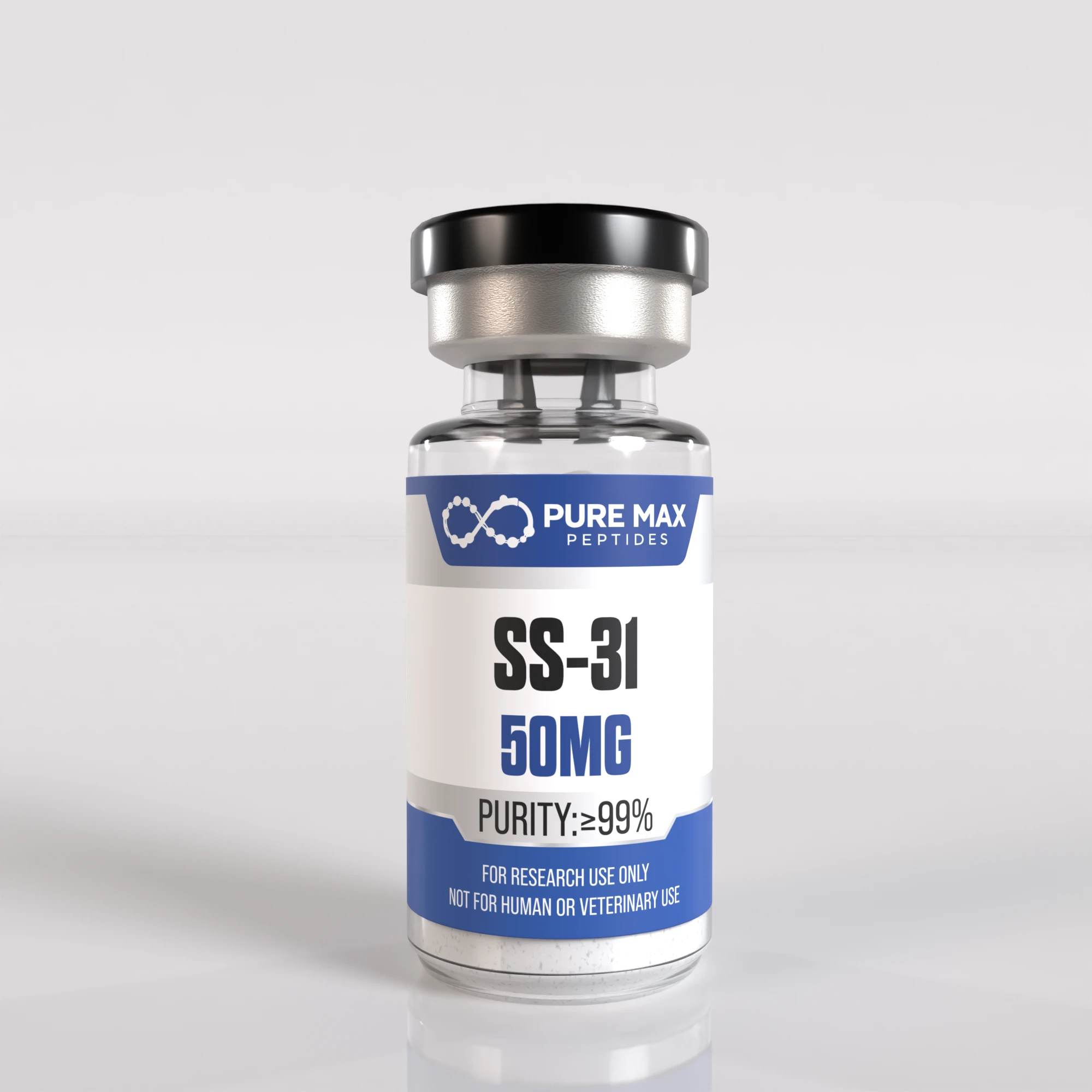
SS-31 50MG
SS-31 50MG is a high-purity research-use-only peptide with potent antioxidant and cytoprotective properties. Structurally optimized, it demonstrates potential in modulating cellular stress responses, though intended exclusively for laboratory use.
$73.00
FREE Shipping on $200+ orders
⚠️ RESEARCH USE ONLY
This product is for R&D purposes only and is not approved for human or veterinary use.
SS-31 (6,7-Dimethoxy-1-naphthylacetyl-L-cysteine)
SS-31 is a synthetic peptide derived from the sequence of bradykinin and has emerged as a subject of significant interest in academic and pharmaceutical research. This compound is designed for investigations involving cardiovascular, cellular, and molecular biology. Below is a detailed overview of its research applications, synthesis, and relevant context within the scientific literature.
Research Context
SS-31 has garnered attention for its potent protective effects against oxidative and inflammatory damage across various biological systems. Initial studies highlighted its role in mitigating myocardial injury, a finding that has since expanded to include neuroprotection, gastrointestinal barrier integrity, and potential therapeutic implications in neurodegenerative diseases. Researchers have utilized SS-31 in models of ischemia-reperfusion injury, traumatic brain injury, and spinal cord trauma, demonstrating its ability to attenuate tissue damage and improve functional outcomes.
Research Overview
SS-31 is characterized by its ability to selectively target and stabilize mitochondrial membranes, thereby reducing the release of pro-apoptotic factors and attenuating cellular stress responses. Its mechanism of action includes inhibition of mitochondrial permeability transition pore opening, a process known to contribute to cell death in conditions of oxidative stress. Early studies by Wang et al. (2013) demonstrated its efficacy in preserving cardiac function post-ischemia in animal models, setting the stage for further exploration in translational research.
Key Research Focus Areas
- Cardiovascular Protection: Evaluation of SS-31’s role in reducing myocardial infarction size and improving recovery following ischemic events in preclinical models.
- Neuroprotection: Investigation of its effects on traumatic brain injury, stroke, and neurodegenerative diseases (e.g., Alzheimer’s and Parkinson’s) via modulation of oxidative stress and inflammation.
- Gastrointestinal Integrity: Examination of its potential in maintaining the epithelial barrier function, particularly in conditions of inflammation or injury (e.g., colitis or gastroparesis).
- Antioxidant and Anti-Inflammatory Mechanisms: Exploration of SS-31’s ability to inhibit mitochondrial dysfunction, reduce lipid peroxidation, and modulate pro-inflammatory signaling pathways.
- Preclinical Toxicology: Assessment of pharmacokinetic properties, safety profiles, and dose-response relationships in diverse animal models to inform translational research.
Structural and Chemical Considerations
SS-31 consists of a modified naphthylacetyl moiety linked to a cysteine residue, conferring its stability and specificity. Its lipophilic nature enhances cellular uptake, while the cysteine tail promotes solubility and potential for metabolic processing. Research has emphasized the importance of its synthesis purity, as impurities or degradation products may alter biological activity or introduce toxic effects.
Cautionary Notes
The following statements are provided for academic transparency and compliance with research ethics:
- SS-31 is intended for use solely in experimental settings under the supervision of qualified researchers adhering to institutional review protocols.
- Exposure to SS-31 requires rigorous handling practices, including appropriate personal protective equipment (PPE) to mitigate potential hazards associated with its chemical nature.
- Preclinical studies are essential before any extrapolation to therapeutic applications, and results should be interpreted within the context of the specific experimental design and model system employed.
| Safety Considerations | Research Compliance |
|---|---|
|
Researchers should conduct toxicity assessments, including acute and subchronic studies, to evaluate systemic effects at relevant exposure levels. |
All experimental procedures must comply with national/international regulations governing animal welfare (e.g., ARRIVE guidelines, EU Directive 2010/63/EU) and human subject protections if applicable. |
|
Dilution and storage protocols must be followed to prevent degradation or unintended modifications during experimental workflows. |
Documentation of all exposure, dosing, and analytical methods is mandatory for reproducibility and regulatory transparency. |
For research use only. Not for human or animal consumption.
Related Products
Related products
-
BAC Water 10ML
$79.00 -
NAD+ 1000MG
$85.00 -
GKP-70 70MG
$85.00 -
HGH 36IU
$78.00